
![[:tj]МАРКАЗИ ТАДҚИҚОТИ СТРАТЕГИИ НАЗДИ ПРЕЗИДЕНТИ ҶУМҲУРИИ ТОҶИКИСТОН[:ru]ЦЕНТРА СТРАТЕГИЧЕСКИХ ИССЛЕДОВАНИЙ ПРИ ПРЕЗИДЕНТЕ РЕСПУБЛИКИ ТАДЖИКИСТАН[:en]Center for strategic research under the President of the Republic of Tajikistan[:]](https://mts.tj/wp-content/uploads/2025/04/banner.jpg)
(English) Youth: The genuine pillar, hope, and pride of Tajikistan’s society and state
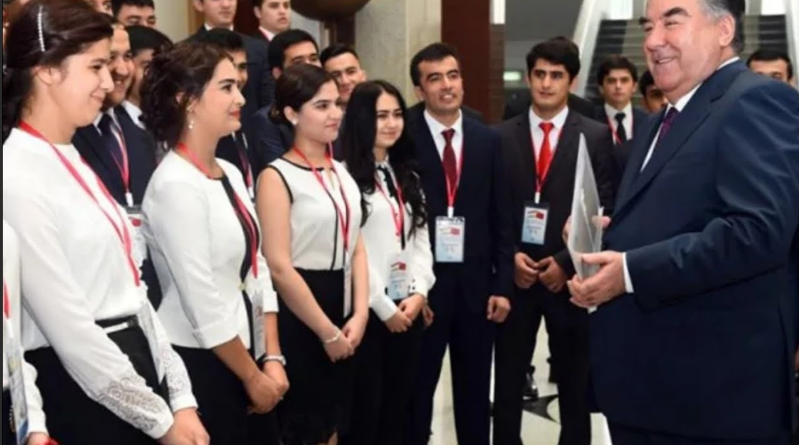
Youth represent the genuine pillar, hope, and pride of the society and the state of Tajikistan. For this very reason, since the early years of state independence, essential measures have been implemented with the support of the Leader of the Nation, President of the Republic of Tajikistan, His Excellency Emomali Rahmon, to create favorable living conditions, promote education, and ensure the physical and spiritual well-being of this active segment of society. Today, the contributions of young people are remarkable across all sectors of the country, including the ranks of the Armed Forces of the Republic of Tajikistan and the development of the national economy. Endorsing the policies pursued by the Government of the Republic of Tajikistan, they propose constructive ideas and implement them in practice with the support of the state leadership. To align education with modern requirements and raise the younger generation in the spirit of patriotism, the most advanced conditions and opportunities have been established in the country.
It is worth noting that the Government of the country consistently supports the constructive initiatives and proposals of youth, providing opportunities for their realization. In response to this care, our adolescents and youth need to direct all their efforts toward gaining knowledge, mastering modern professions and crafts, ensuring the prosperity and progress of their ancestral land, defending the Motherland, developing science and technology, and engaging in constructive endeavors.
Today, in its socio-economic policy, the Government of the country attaches paramount importance to the development of human capital as a key factor in raising the level, quality, and efficiency of various sectors during the period of the country’s independence. In this regard, in the National Development Strategy of the Republic of Tajikistan for the period up to 2030, human capital occupies the primary position among long-term development factors and is defined as a priority area of the Government’s activity. Furthermore, this core programmatic document for the country’s development substantiates the principles and tasks of human capital development to achieve the nation’s strategic goals.
In one of his addresses to the Majlisi Oli of the Republic of Tajikistan, the President of the country paid special attention to the issue of science, education, and the subjects of the educational process. The Head of State, His Excellency Emomali Rahmon, considers the development of science and education as the key to progress in all spheres, a crucial factor for ensuring a stable future for the state, and a prosperous tomorrow for society. He highlighted the development of human capital as an important and powerful catalyst that drives advancement, innovation, and modern technologies.
It should be noted that the development of human capital is a key factor in improving the quality and efficiency of social sectors, particularly education, healthcare, science, innovation, as well as the effective operation of scientific institutions. In his Address «On the Main Directions of the Domestic and Foreign Policy of the Republic» dated December 28, 2023, the President of the Republic of Tajikistan, His Excellency Emomali Rahmon, emphasized: «The modern development of the economy and the increase of its competitiveness are impossible without the development of human capital.»
Human development indicators primarily depend on access to favorable educational conditions, the effectiveness of youth performance, quality education, rising literacy levels, the enhancement of knowledge and comprehension, and professional training, all of which constitute the foundation of human capital formation. In this regard, the Republic of Tajikistan dedicates increasing attention and care to this area year after year; greater focus is placed on the quality of professional training, and favorable conditions are created for human capital development. It is worth mentioning that every year, funding for the development of science and education is allocated by the country’s government, showing a progressive increase. If we compare this to the early years of independence, expenditures on education relative to the Gross Domestic Product (GDP) in 2022 were 2.64 times higher than in 1995.
Moreover, during this period, 30 public investment projects worth more than 3.5 billion somoni have been implemented in the education sector using state budget funds, and currently, another 11 projects totaling 4.6 billion somoni are underway. While in the year 2000, only 42 million somoni were allocated to the education sector, this figure rose to 253 million in 2005, exceeded 1 billion in 2010, reached 2.5 billion in 2015, 5.5 billion in 2020, and in 2025, 10 billion 909 million 496 thousand somoni were allocated. This accounts for 6.6% of the Gross Domestic Product and 21.1% of the total state budget expenditures, which is 2 billion 677 million 600 thousand somoni or 32.5% more compared to 2024 (the education budget in 2024 was 8 billion 231 million 867 thousand somoni).
At the same time, it should be noted that during the years of the country’s independence, all necessary conditions have been created for youth in society. While in 1991 we had only 13 higher education institutions with 69 thousand students enrolled, today the number of higher professional education institutions has reached 48, where 214 thousand students are engaged in acquiring modern knowledge and science. New educational facilities built and commissioned with the support of the Government of the Republic of Tajikistan comply with international standards and employ experienced teachers, which provides a solid foundation for the intellectual development of youth and adolescents.
The pursuit of knowledge and education is of primary importance, and every young person, regardless of gender, must become educated and enlightened to make a worthy contribution to the future prosperity of the state and the nation. Overall, it can be said that the state youth policy in the Republic of Tajikistan is being implemented step by step, contributing to the formation of national self-awareness among youth and the development of this powerful and large segment of society as the main intellectual resource and core foundation of human capital. Young people, undoubtedly, play a key role as the future of the state and nation, the driving force of society, and the strategic resource of the state and Government for the steady development of Tajik society under the conditions of rapid socio-economic dynamics and intense global competition. State institutions, especially educators and other relevant structures in the youth sector, are duty-bound to raise a patriotic, self-aware, and enlightened generation, fulfilling their mission in this direction with a high sense of responsibility.
The Republic of Tajikistan attaches paramount importance to youth employment, striving to reduce the unemployment rate among young people. For instance, the youth unemployment rate in Tajikistan stood at 16.91% in 2022, which is 1.35% lower than in 2021. In 2021, it was 18.26%, which was 0.79% higher than in 2020. In 2020, it stood at 17.47%, which was 2.13% higher than in 2019. In 2019, it was 15.34%, which was 0.15% lower than in 2018. Nonetheless, it should be noted that the youth unemployment rate has significantly decreased compared to earlier years—whereas it was 29.08% in 2004, it stands at 14.59% in 2025. This clearly demonstrates that the unemployment rate is decreasing year by year.
It should be emphasized that regardless of the challenges mentioned above, the Government of the country has adopted the National Program for the Social Development of Youth in Tajikistan five times for the periods 1999–2000, 2001–2003, 2004–2006, 2007–2009, and 2010–2012. These programs were aimed at improving the social and living conditions of youth, reducing unemployment, preventing negative social phenomena and the breakdown of young families, regulating demographic challenges, and addressing a number of other pressing issues, thereby creating a favorable framework for the implementation of the state youth policy.
From the foregoing, it can be concluded that today, favorable conditions have been established in the republic for the formation of national self-awareness and the cultivation of patriotism among youth. The measures taken in this direction by various state structures, particularly in the field of education, will undoubtedly contribute to the implementation of the state policy of the Republic of Tajikistan regarding youth upbringing and ensuring the sustainable development of the country.
References
- https://khovar.tj/
- Address of the President of the Republic of Tajikistan, His Excellency Emomali Rahmon «On the Main Directions of the Domestic and Foreign Policy of the Republic.» 12.2023.
- statista.com/statistics/813092/youth-unemployment-rate-in-tajikistan/
- Tajikistan: Youth unemployment rate from 2004 to 2024
Chief Specialist of the Department of analysis
of social issues, migration and public affairs studies
Abdulloeva T.