
![[:tj]МАРКАЗИ ТАДҚИҚОТИ СТРАТЕГИИ НАЗДИ ПРЕЗИДЕНТИ ҶУМҲУРИИ ТОҶИКИСТОН[:ru]ЦЕНТРА СТРАТЕГИЧЕСКИХ ИССЛЕДОВАНИЙ ПРИ ПРЕЗИДЕНТЕ РЕСПУБЛИКИ ТАДЖИКИСТАН[:en]Center for strategic research under the President of the Republic of Tajikistan[:]](https://mts.tj/wp-content/uploads/2024/11/bannerrus-1.jpg)
(English) DEVELOPMENT AND PROSPECTS OF STRATEGIC COOPERATION BETWEEN THE REPUBLIC OF TAJIKISTAN AND THE ISLAMIC REPUBLIC OF PAKISTAN
Relations between the Republic of Tajikistan and the Islamic Republic of Pakistan at the present stage serve as an example of a profound and dynamically developing strategic partnership. This cooperation is not temporary in nature but is based on long term interests and a solid foundation of centuries old cultural historical and spiritual affinity between our peoples. The historical ties linking our states since the time of the Great Silk Road when Central and South Asia represented a unified trade and intellectual space today form the basis for the development of modern mutually beneficial relations in politics economy and culture creating unique opportunities for strengthening partnership.
It should be noted that Islamabad was among the first states to recognize the independence of Tajikistan in 1991 which laid the groundwork for the establishment of a new type of interstate relations. Over the past three decades the parties have gone through a significant path from establishing basic diplomatic contacts to signing the Declaration on Strategic Partnership. This path has been characterized by the gradual expansion of areas of cooperation increased trust and joint work on projects of strategic importance for both countries.
Particular importance is attached to the personal trust based interaction between the Leader of the Nation President of the Republic of Tajikistan His Excellency Emomali Rahmon and the Prime Minister of the Islamic Republic of Pakistan His Excellency Shehbaz Sharif. Regular high level visits and active political dialogue give stability and consistency to cooperation. These meetings serve not only to coordinate political positions but also to discuss concrete steps for the development of economy transport energy and humanitarian initiatives which creates a practical foundation for relations based on trust.
The special significance of Tajik Pakistani partnership becomes even more evident in the context of the current geopolitical situation. Dushanbe and Islamabad understand that the stability and development of the two countries are directly linked to strengthening regional development energy security and expansion of transport connectivity. At the same time the countries jointly elaborate bilateral approaches to addressing regional issues and actively interact within multilateral organizations which makes it possible to enhance the level of security and sustainability in Central and South Asia.
The economic vector of cooperation is confirmed by specific indicators. Despite external challenges the volume of mutual trade at the end of 2025 amounted to approximately 43 million US dollars. At the same time the parties view this figure as an initial stage. The leadership of the two countries has set a strategic task to increase annual trade turnover to 500 million US dollars in the coming years. The work of the Intergovernmental Commission is aimed at expanding the range of goods developing the textile industry pharmaceuticals and agriculture. In parallel the parties consider the possibilities of introducing joint educational and technological programs in order to stimulate innovation and create new high technology production.
An important area remains investment cooperation. Pakistani investments in the economy of Tajikistan are mainly directed to pharmaceutical production light and textile industry trade services and agriculture. Joint enterprises are being established and business contacts are expanding. The total volume of Pakistani investments is estimated at tens of millions of US dollars. Although these figures remain moderate the parties are interested in increasing them and attracting new investors. The development of investments is facilitated by regular business forums and exchanges of business delegations which creates a transparent and trust based environment for entrepreneurs of both countries.
A logical continuation of the high level of political trust has become practical achievements in the energy sphere. The CASA 1000 project remains a central link of regional development. Its total investment value amounts to approximately 1.16 billion US dollars. The implementation of the project will allow Tajikistan to export surplus electricity to Pakistan strengthening energy sustainability and contributing to the formation of a common energy market. At the same time the parties consider further joint energy initiatives including the development of renewable sources and modernization of networks which opens additional opportunities for economic growth and strengthening regional integration.
Strategic importance is also attached to the development of transport cooperation. For Tajikistan as a landlocked state access to the Pakistani ports of Gwadar and Karachi is an important direction of foreign economic policy. The development of the transport corridor Gwadar-Peshawar-Kabul-Kunduz-Dushanbe as well as the use of alternative routes creates conditions for expanding exports and transforming the region into an important logistical hub. These transport projects contribute to the integration of the region into global supply chains and open new prospects for trade investment and tourism.
Along with bilateral mechanisms multilateral cooperation is also actively developing. Tajikistan and Pakistan interact within the framework of the Shanghai Cooperation Organisation the Organisation of Islamic Cooperation the Economic Cooperation Organization and the United Nations. Within these formats efforts are coordinated to ensure regional security sustainable development economic integration and strengthening stability. Joint initiatives in these organizations allow the countries to coordinate approaches to economic environmental and social issues creating conditions for long term cooperation and stability.
Despite significant achievements certain challenges remain which require attention and joint work. One of them is the need for further development of transport and logistics corridors including highways railways and ports in order to increase the efficiency of goods movement and reduce costs. Another important direction is the expansion of digital and information interaction between the countries. Modern digital platforms will make it possible to accelerate data exchange improve quality control and monitoring of transit routes as well as facilitate the work of entrepreneurs.
At the same time the task of attracting additional investments and developing joint projects remains relevant. The parties are interested in creating new conditions for business and industrial cooperation in order to ensure stable economic growth and strengthen strategic partnership. An important step in this direction is the activation of programs for exchange of experience and joint scientific and practical research which creates additional opportunities for introducing innovations and increasing competitiveness.
Regular negotiations at the highest level trust and mutual understanding between the leaders of the two countries active cooperation in the fields of economy transport energy and humanitarian sphere create a solid basis for successfully overcoming existing challenges. These relations form a stable platform for expanding trade investments and social projects contributing to strengthening mutual trust between the peoples. The parties are already considering a number of measures for further development of cooperation. Among them are the expansion of direct air communication between Dushanbe and Islamabad modernization of transport infrastructure and ports the use of modern digital platforms for information exchange and route monitoring strengthening multilateral diplomacy through the SCO OIC and other regional organizations as well as the creation of a favorable business climate through Trade Houses and a Business Council. Additionally the possibility of expanding joint educational cultural and technological initiatives is being considered which creates additional prospects for strengthening long term ties between the countries.
These steps are aimed at gradual improvement of infrastructure expansion of economic and investment opportunities and increasing the effectiveness of bilateral and multilateral cooperation which will allow Tajikistan and Pakistan to strengthen strategic partnership and jointly develop the regional space for stable and sustainable prosperity.
Strategic relations between Tajikistan and Pakistan are an example of a successful mutually beneficial and dynamically developing partnership. Trust and mutual understanding established between the countries are supported by regular meetings at the highest level and joint projects in energy transport industry and investment sphere.
Bilateral and multilateral initiatives create a solid basis for further strengthening cooperation. Well developed bilateral relations ensure effective interaction in politics economy transport energy agriculture culture and education. Multilateral cooperation through regional organizations such as the SCO OIC ECO and other international structures allows coordination of efforts to ensure stability security and sustainable development of the region.
The prospects of partnership include expansion of industrial cooperation joint development of natural resources development of transport infrastructure digitalization of processes preservation of ecosystems and glaciers as well as the formation of a sustainable economic environment. All this creates conditions for stable growth development of entrepreneurship and improvement of the quality of life of the population of the two countries. In addition activation of joint projects in science education and culture strengthens friendly ties between the peoples and contributes to the formation of a positive image of both countries in the international arena.
Thus Tajik Pakistani relations are becoming an important factor of regional stability and prosperity transforming Central and South Asia into a space of trust mutual understanding and sustainable cooperation. Further development of partnership will allow not only to increase economic potential but also to strengthen political cultural and social interaction creating a solid foundation for a prosperous future of the two countries and the region as a whole.
Deputy Head of the Department
Analysis and Forecasting of Foreign Policy
Center for Strategic Research
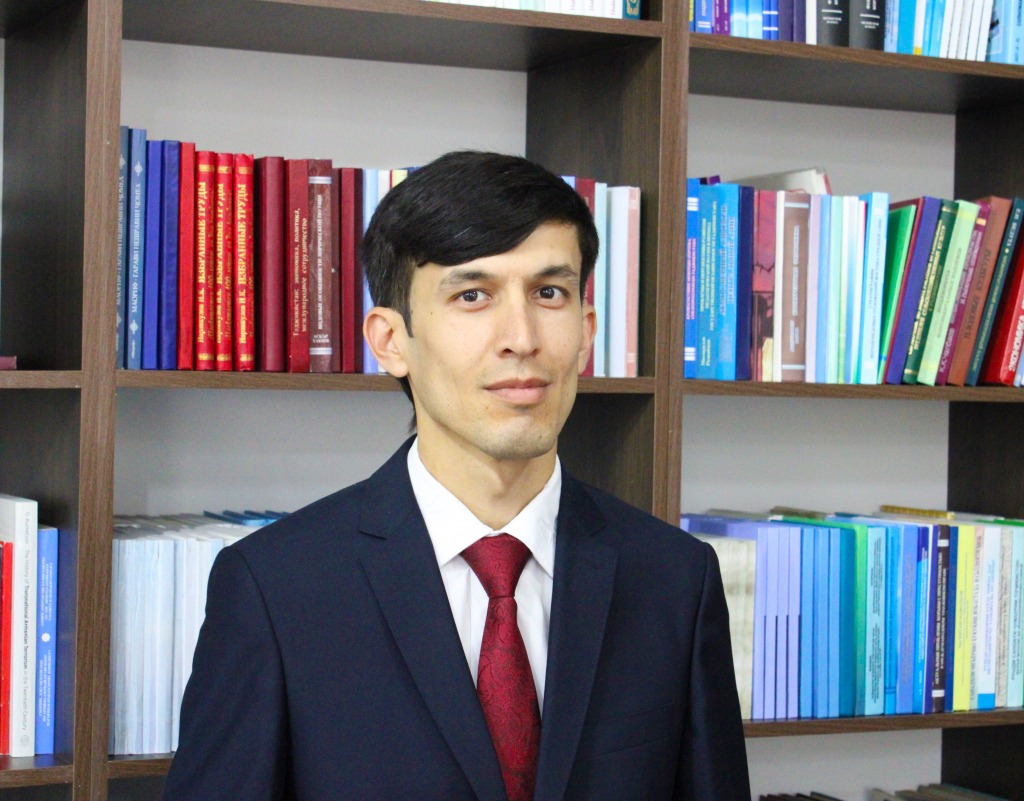
Bakhtovar Rashidov